The big one
Repair it, or replace it. We'll tell you which one actually makes sense.
Every AC call ends with the same fork: fix what's there or put in something new. We work both sides of it as an Amana dealer, and you get real numbers for each path before anyone recommends one.
How we decide between fixing it and replacing it
The age of the system is the starting point, but it isn't the whole answer. What matters more is how it's been failing, one part this year versus a third breakdown in three summers, and what refrigerant it runs on, since that changes what a repair actually costs to source. Duct is the piece most homeowners never suspect. A unit that's been oversized or undersized to fight a leaky, crushed, or badly routed duct run can look like it needs replacing when the real fix is in the attic, not on the pad. We check both before we recommend either. Sizing a Cypress system means running the load for this house against Gulf Coast humidity, not pulling a number off the old unit's nameplate and matching it.
Why the wrong size unit never actually feels right
An oversized condenser cools the air fast and shuts off before it's pulled the humidity out of the house, so the thermostat says the target is met while the air still feels damp. It short cycles, wearing the compressor with more starts than a correctly sized unit ever sees, and the electric bill goes up for a system that's supposedly newer and better. Right sized and it runs longer, steadier cycles that actually dry the air out, which in a Cypress July matters as much as the temperature number does.
Air City is an Amana dealer, licensed and insured under Texas licence TACLB00114911E. Call (713) 804-7005.
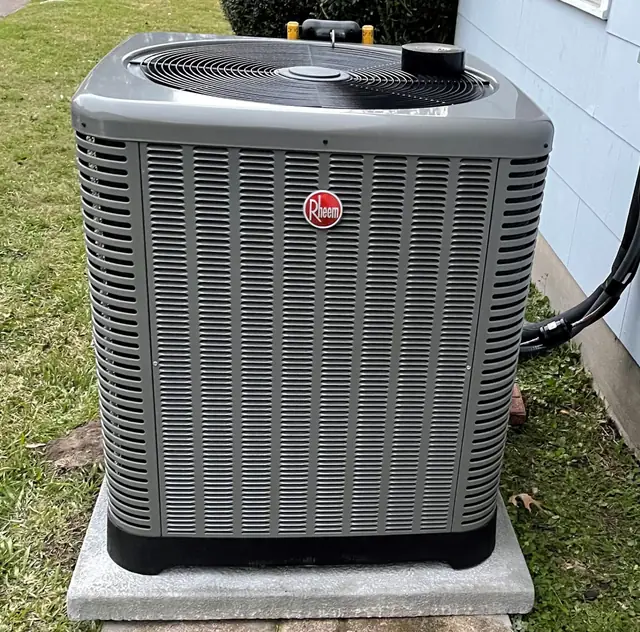
Once the new system is in
A replacement is only as good as what's checked on the way out.
We pull the old system apart enough to see whether the duct, the returns, and the thermostat wiring are worth keeping as they are. A new thermostat gets set up and explained before we leave, not left on default. And once the install is done, a seasonal check on the maintenance side is what keeps a new unit running like a new unit for longer than the first summer. If the fault turns out to be a breakdown that can't wait, that's emergency callout territory instead, and the same crew handles both.